The first time I actually saw root mealy bugs was in Feb 2025
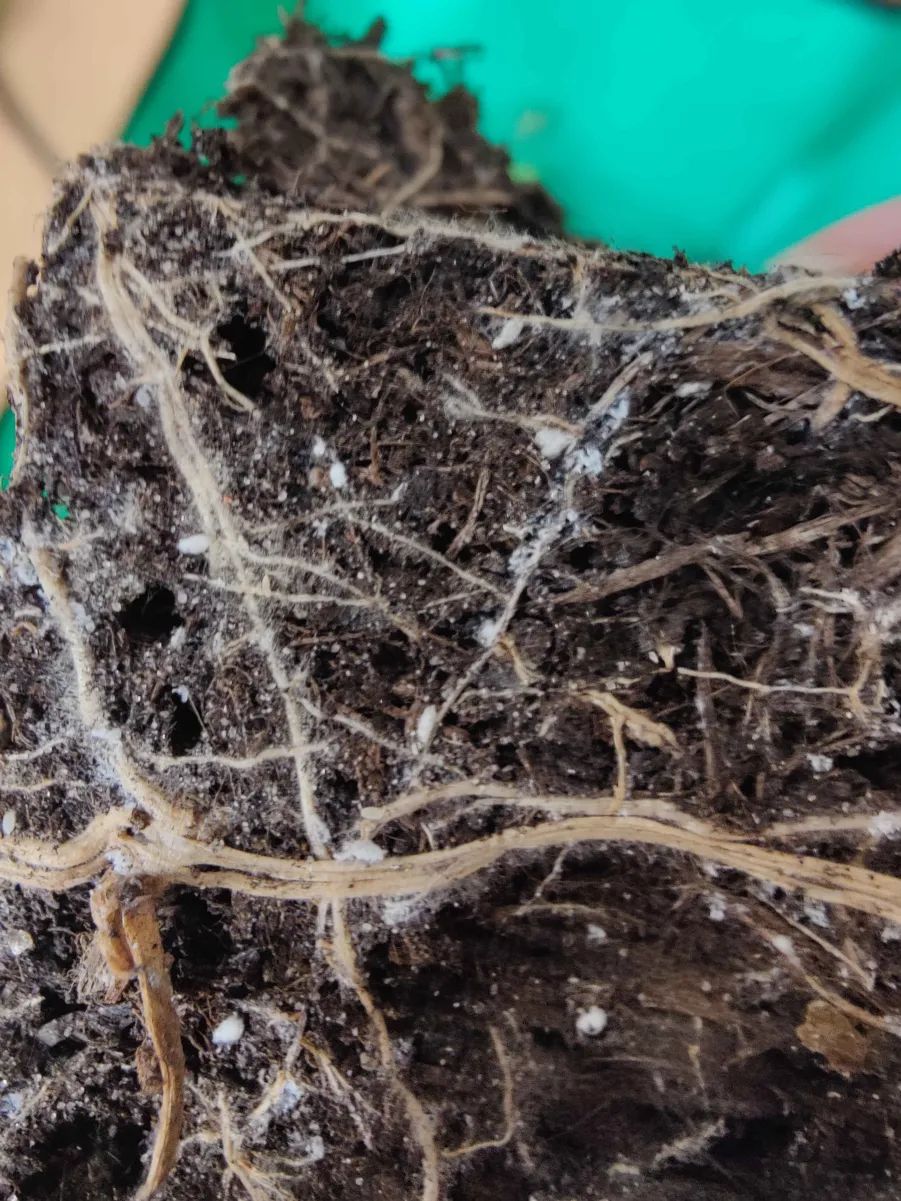
I threw away the infested Pereskiopsis, since I had too many of them anyway, and just ignored the fact that they probably were a lot more in my other plants. From the smell of some pots I knew I’d have to stop pretending at some time, but I was in middle of moving to a new apartment and I’m lazy and disorganized and no plants were dying so…
In late August a lot of seedlings were long overdue for repotting, so I
couldn’t ignore the issue anymore 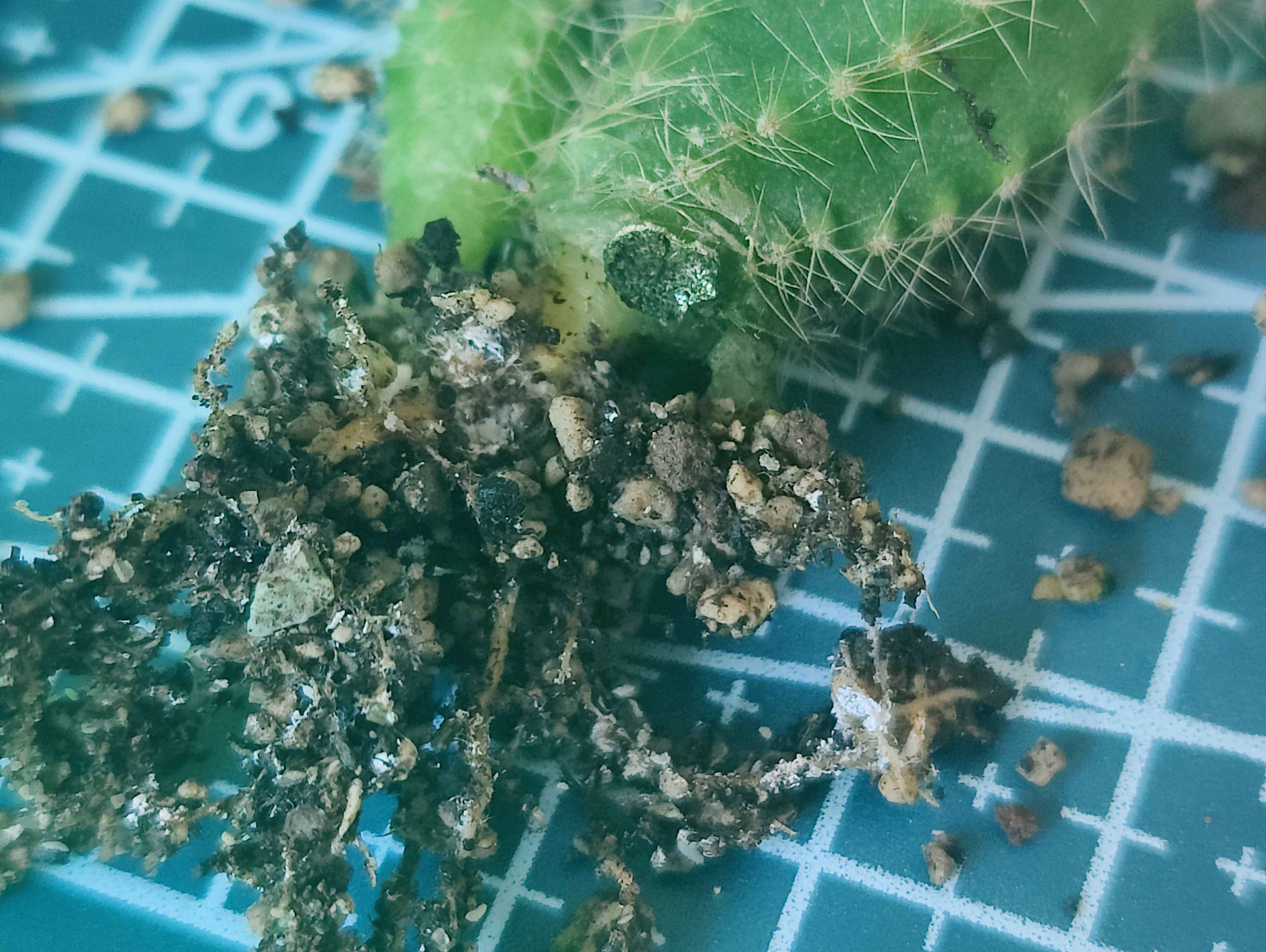
Hot water treatment
I bought an immersion circulator (“sous-vide cooker”) to soak the roots of some seedlings in hot water.
The idea: heating the root balls to 46-49°C which should kill root mealies and their eggs. However, it might kill some plants and I didn’t know how young cacti would handle it. In addition, it is quite tedious because I didn’t want to cook the whole plants, so I had to figure out a way to keep only the roots in the water.
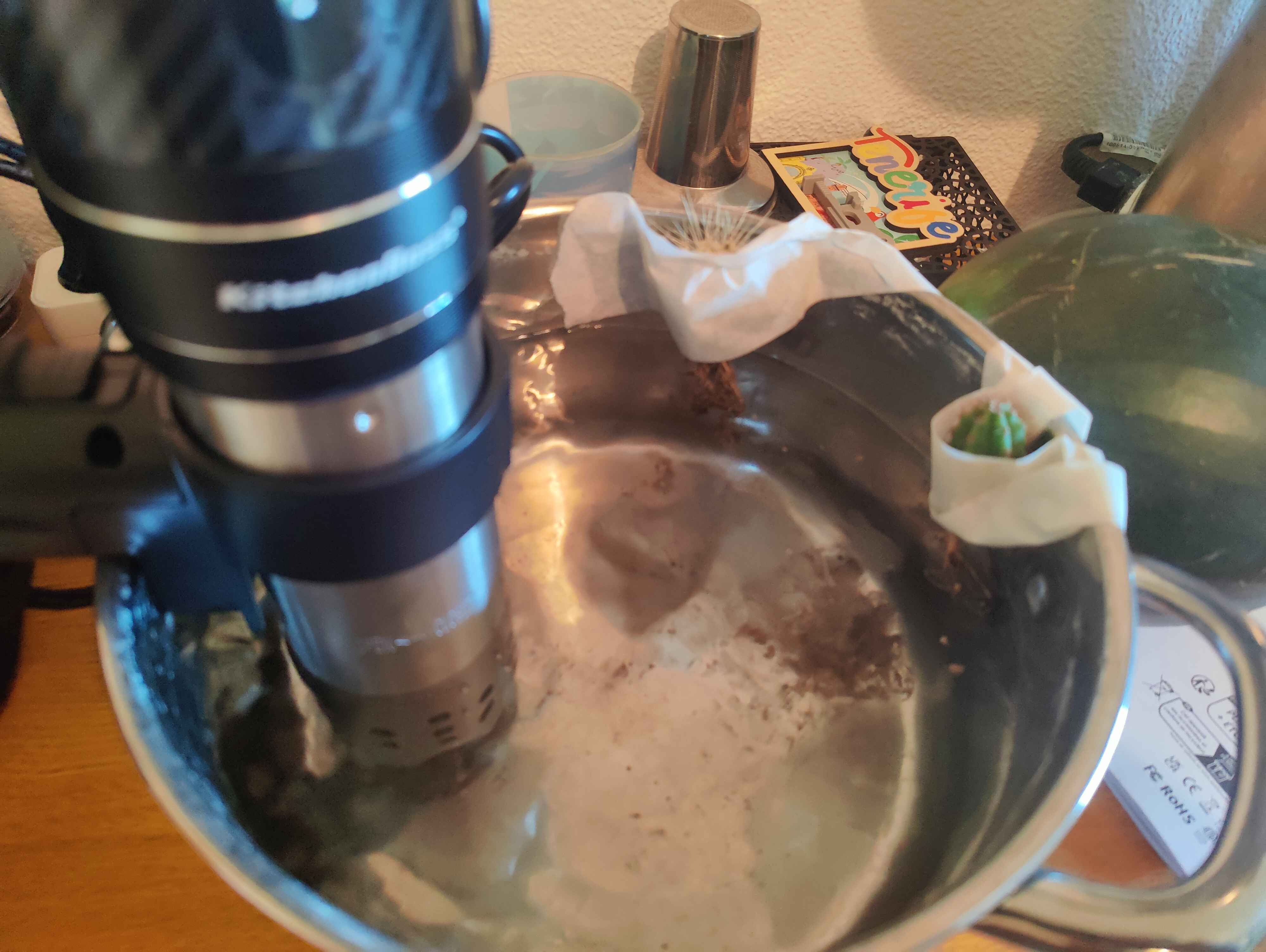
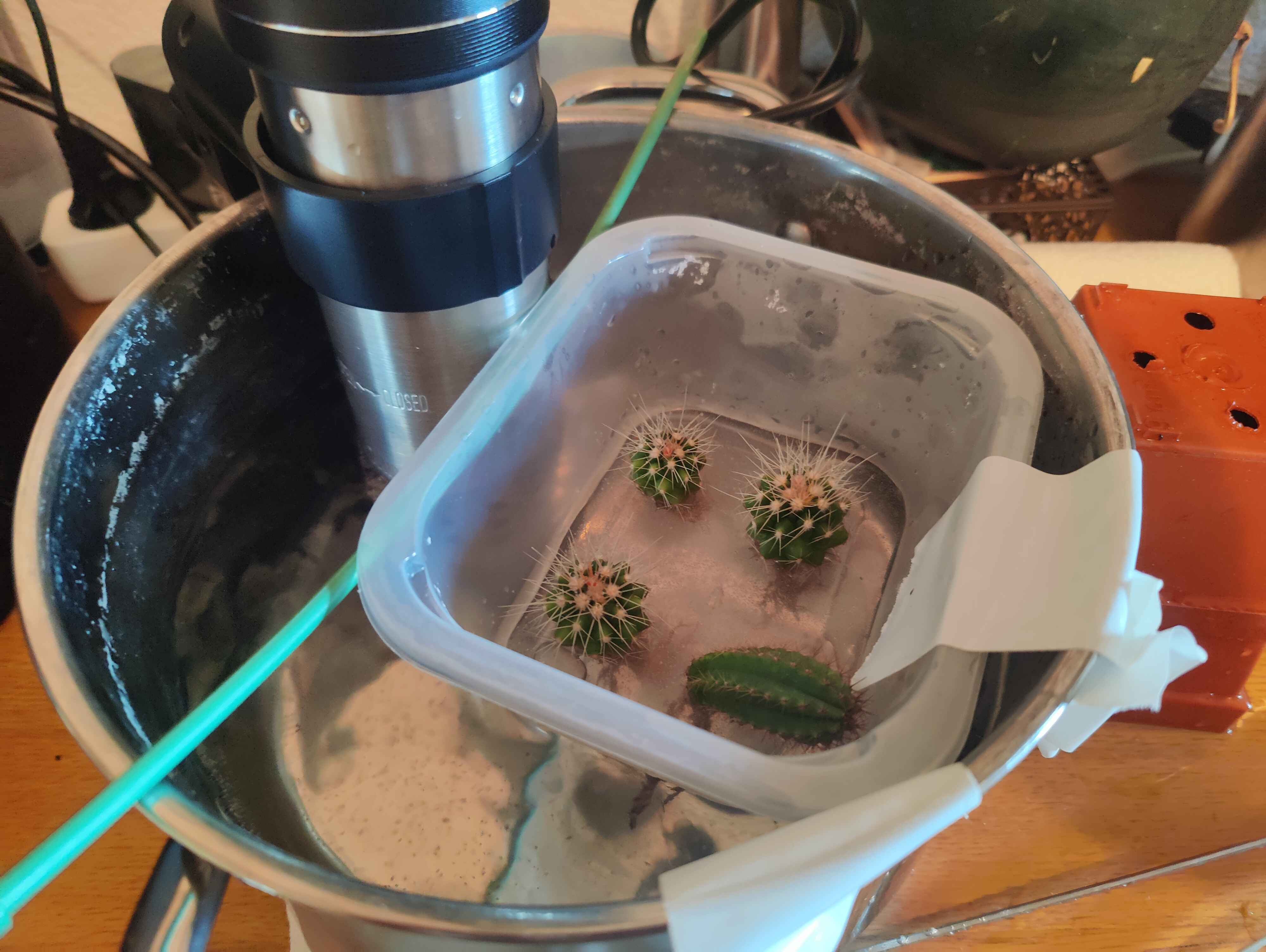
My 3D printer is out of order, otherwise I could have tried to build something re-usable. Another solution I should look into is to use polysterene foam boards. They have advantage of floating, so I think it could work pretty well.
In any case, the only solid resources on that method are studies on potted Rhapis palms [Hu, Hara, and Hata (1996)], and there is a serious lack of information for other plants. I’ve been told than some South-African succulents do not tolerate the treatment.
The plants I’ve treated this way back in September (I’m writing this 8 months later in May) have survived but… root mealybugs have come back. More on that later.
Isopropyl alcohol
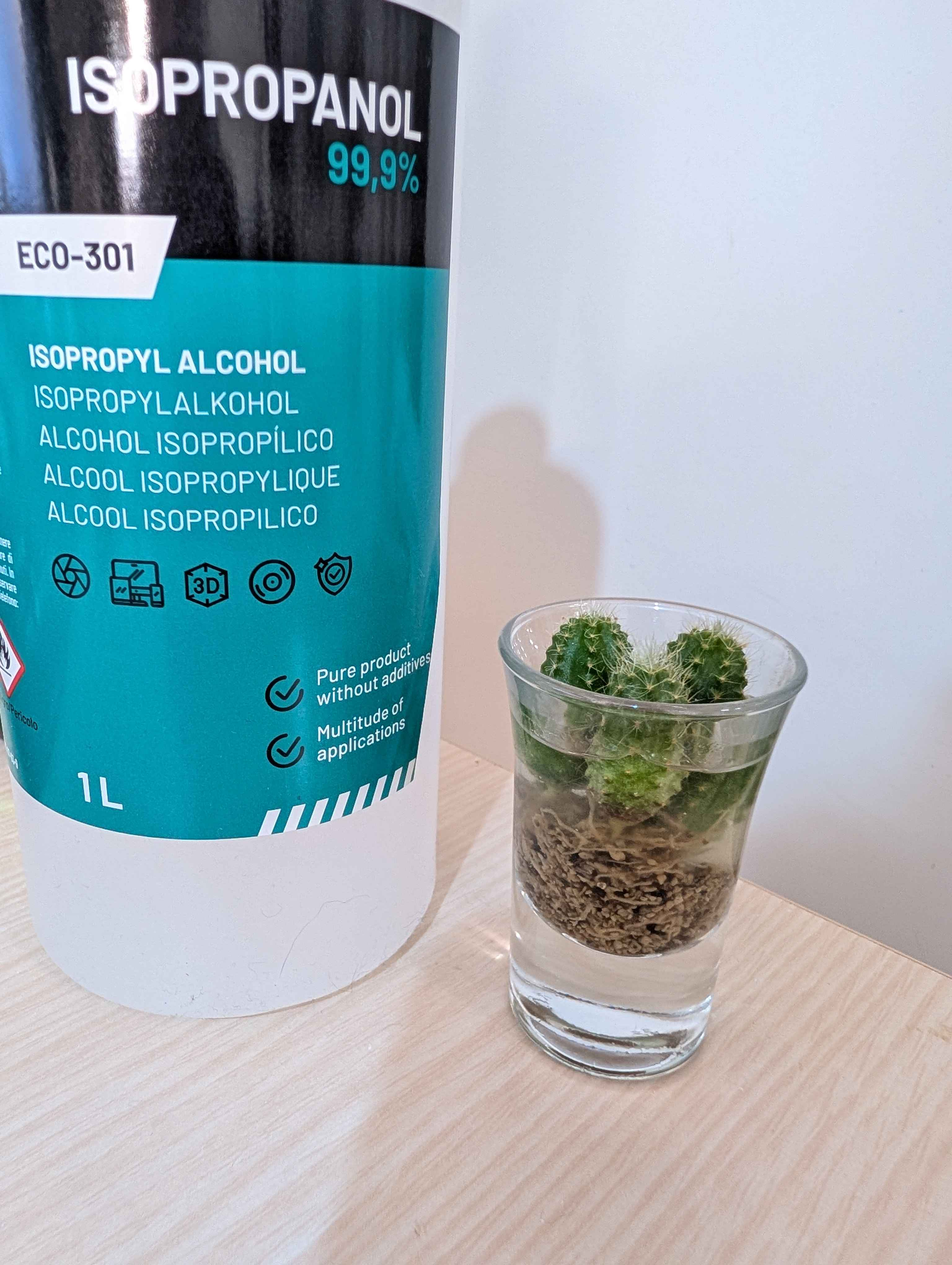
For now, my cacti are becoming alcoholic. I was initially concerned I would destroy seedlings’ fragile roots, so I’ve only done it with a few E. grusonii, Ferocactus and Trichocereus seedlings. All survived… but root mealies came back.
After that, I’ve been less concerned about killing seedlings. Not sure yet whether they can all handle it, because it’s been a few weeks and I haven´t repotted them yet. If they die, it might not be because of the alcohol…
No roots, no root mealybugs!
With dozens of seedlings to treat, no idea if they would tolerate hot water or alcohol soaking, and not having enough free time, I decided to simply remove the roots of most seedlings. The plan was to graft them, which I’ve quickly realized would be even more time-consuming. I ended up keeping them in small baggies “temporarily, for a few days until I graft them”.
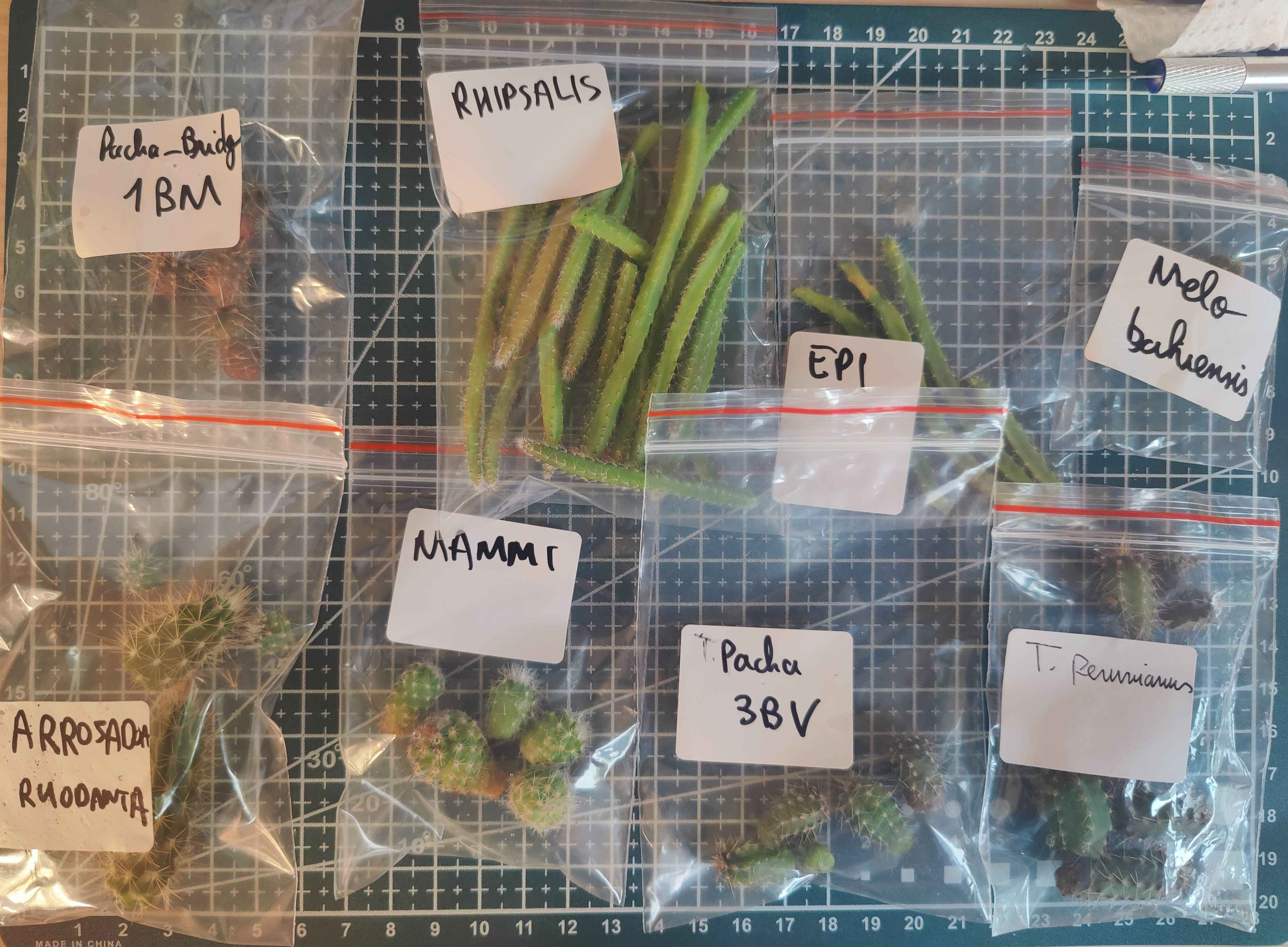
6 months later, they hadn’t all dried and even started making roots in the bags!
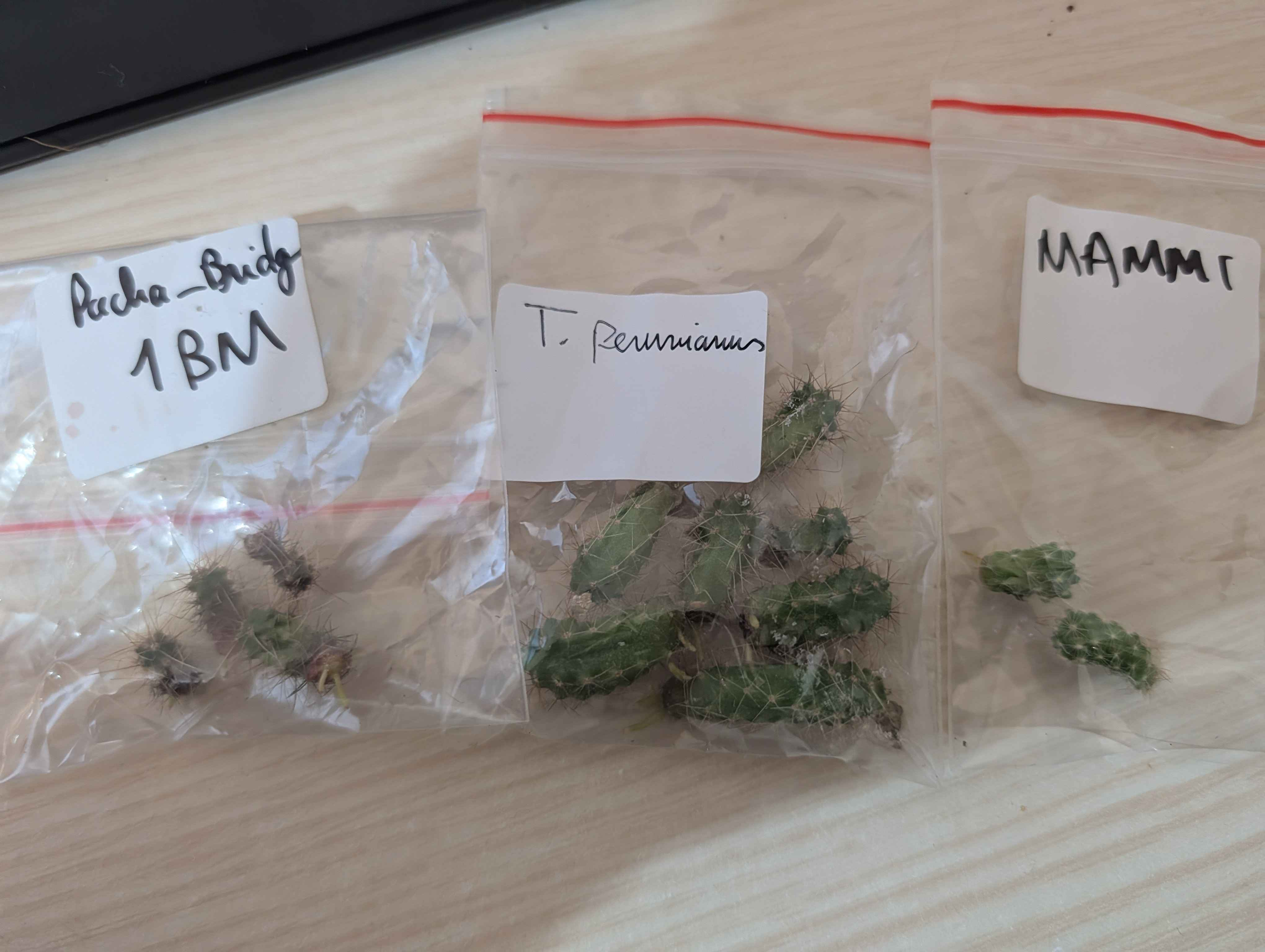
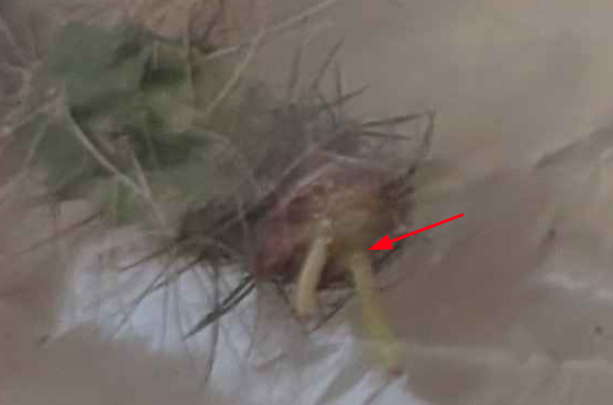
I’ve planted a few of them, maybe they’ll live!
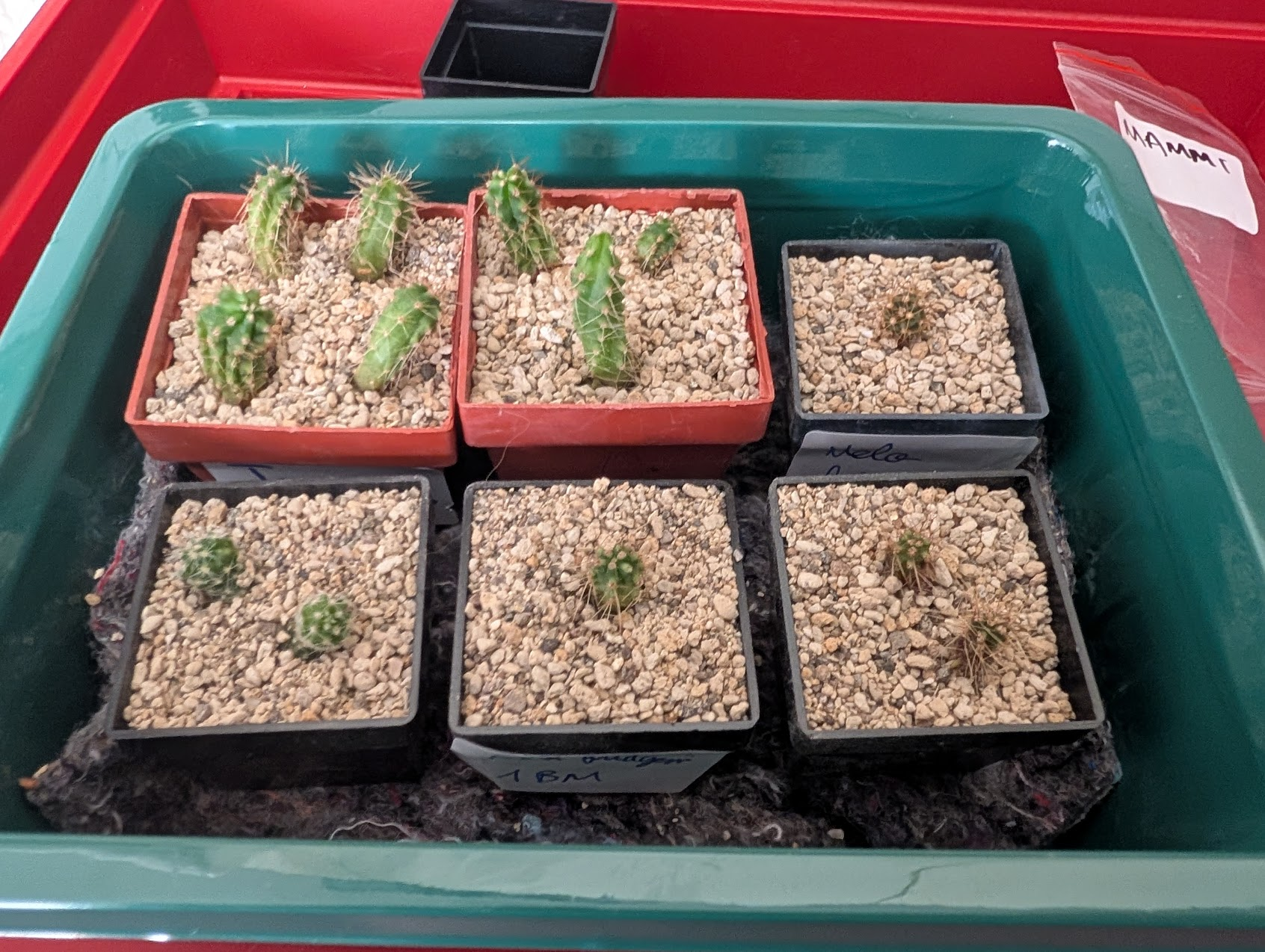
In April I had to repot a more recent batch of seedlings, and, of course, they were also infested. This time I took the time to graft some of them immediately.
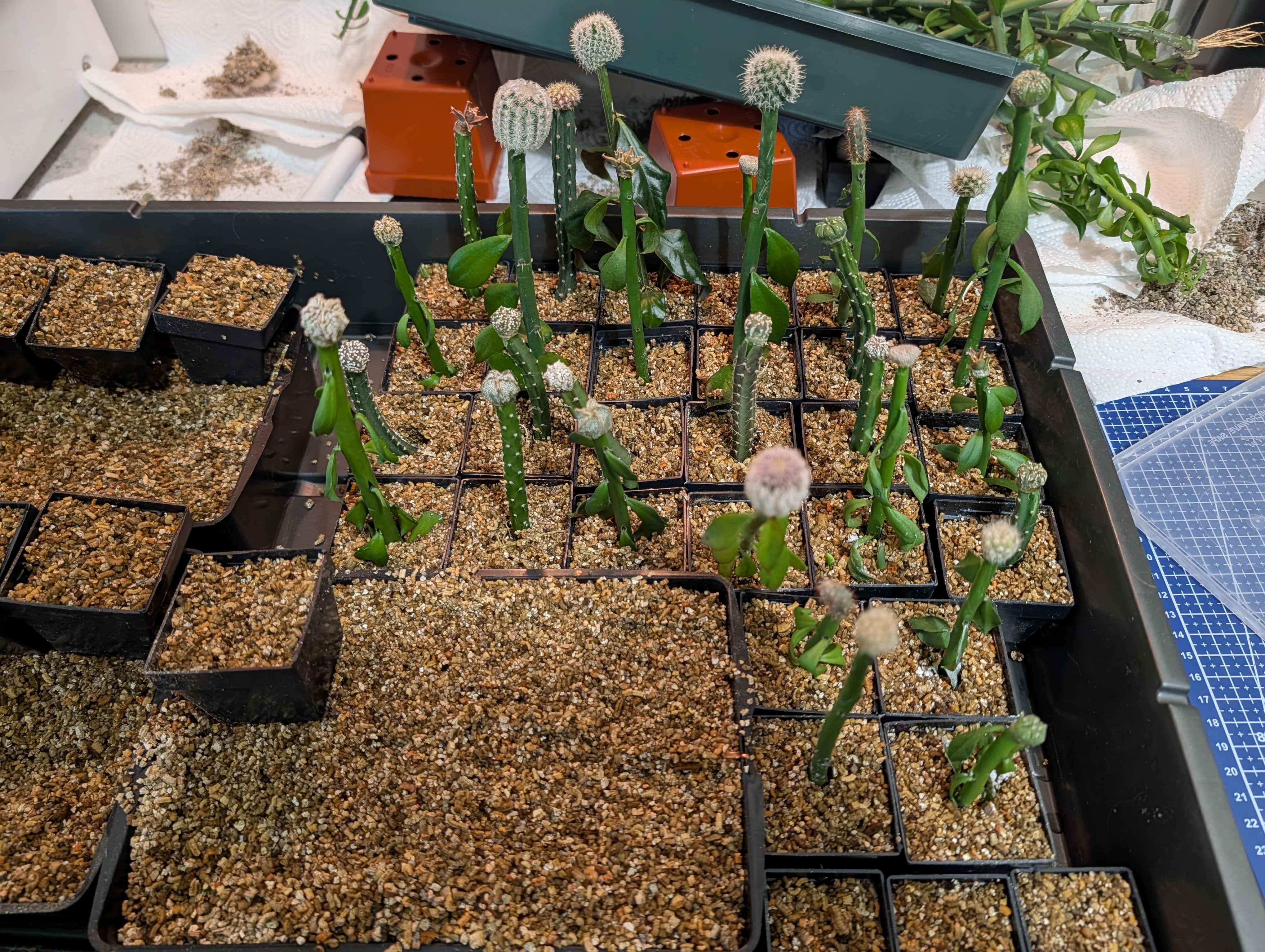
But they keep coming back…
Sadly, even plants soaked in alcohol end up getting infested again. I’ve grafted seedlings on non-rooted Selenicereus that I’d soaked in alcohol, and a few weeks later they were infested too.
I figure my tents are the source and I need to sanitize everything. Otherwise, I will never know what treatments work or not.
To be continued…
Other solutions I will look into
- Nematodes
- Pyrethrins
- Stratiolaelaps scimitus (soil-dwelling predatory mites, also see Predatory Bugs – I don’t have much hope with those, however)
- CO₂, see CO2 Fumatigation chamber (yes, I know, I’ve made a typo when creating that page.)
References
“Ground (Root) Mealybugs / Floriculture and Ornamental Nurseries / Agriculture: Pest Management Guidelines / UC Statewide IPM Program (UC IPM).” n.d. https://ipm.ucanr.edu/agriculture/floriculture/ground-root-mealybugs/#gsc.tab=0. Accessed May 2, 2026.
↩ 1
Hu, B. K. S., A. H. Hara, and T. Y. Hata. 1996. “Hot Water as A Potential Treatment Against Root Mealybugs, Hawaii, 1995.” Arthropod Management Tests 21 (1): 382–83. https://doi.org/10.1093/amt/21.1.382a.
↩ 1